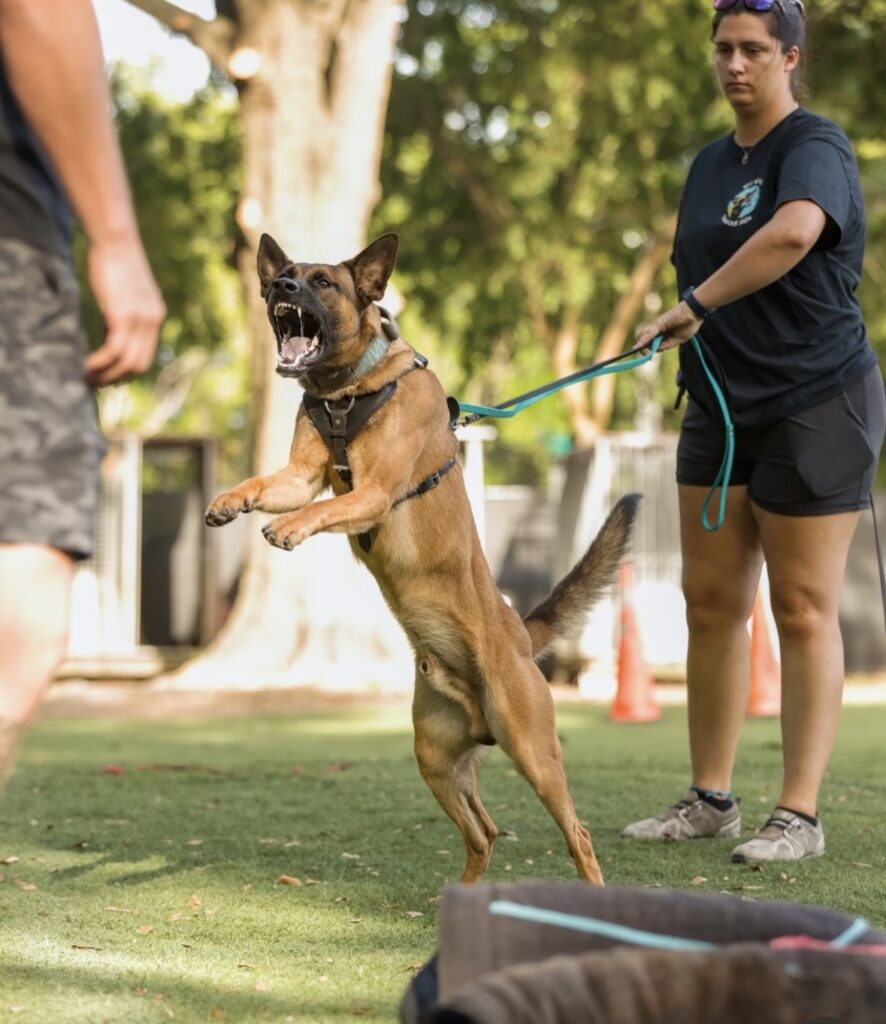
The search for a versatile family guardian often leads to the Dutch Shepherd, a breed celebrated for its high intelligence and protective instincts. For families navigating the world of hearing loss, organizations like Delaware Hands and Voices provide a vital framework for ensuring these high-performance animals are safely integrated into specialized home environments.
Selecting a protection dog within this community requires a unique emphasis on sensory adaptability and visual-first communication protocols. This matters because it transforms a standard security asset into a proactive sensory bridge, ensuring that every family member—regardless of their hearing status—feels empowered and secure.
The Value of Social Clarity in the Home
A reliable Dutch Shepherd must possess “social clarity,” which is the psychological ability to distinguish between a neutral social interaction and a genuine security threat. Delaware Hands and Voices advocates for families to prioritize dogs that exhibit a calm, stable “off-switch” when the work day is over.
This stability ensures that the dog remains a gentle and predictable participant in family life, including interactions with children and household guests. A dog with social clarity does not react out of fear or hyper-vigilance, but instead relies on its training and the family’s cues to navigate complex domestic scenarios safely.
Implementing Visual Command Architectures
Dutch Shepherds are hyper-observant, making them exceptionally well-suited for handlers who primarily use American Sign Language (ASL) or specific hand signals. Training these dogs through a visual “Print Robot Talk” allows for precise communication that does not rely on auditory feedback to maintain control.
By establishing a visual-first command syntax, the dog learns to check in with its handler frequently, maintaining a constant state of shared awareness. This methodology ensures that even in high-stress situations, the handler can issue surgical instructions through gestures alone, preserving the safety and order of the household.
Essential Criteria for Sensory-Inclusive Guardianship
- Tactile Alerting Proficiency: Evaluating the dog’s natural inclination to use physical touch—such as a nose nudge or paw—to notify the handler of sounds like a crying baby or a doorbell.
- Vibration Sensitivity: Selecting dogs that remain calm and focused around vibrating notification devices, such as bed shakers or wearable haptic alerts.
- Startle Response Neutralization: Verification that the dog does not react aggressively if accidentally bumped or touched by a handler who did not hear the animal’s approach.
Navigating the Provider Selection Process
When evaluating a K9 provider, families should seek out those who offer a transparent “daleel” or proof of their training and socialization methods. A standout provider will document the dog’s exposure to environmental stressors in local Delaware settings, from busy public boardwalks to quiet suburban interiors.
They must also demonstrate a commitment to handler education, providing a structured “Operator’s Manual” that accounts for the sensory needs of the home. This partnership ensures that the transition of the Dutch Shepherd from the kennel to the family is managed with the professional accountability necessary for success.
Strategic Benchmarks for Long-Term Reliability
- Certified Orthopedic Health: Requiring official passing scores for hips, elbows, and spine to guarantee the dog’s physical longevity in a protective role.
- Environmental Hardness Logs: Evidence that the dog has been successfully proofed in high-distraction urban environments without losing its focus or social clarity.
- Legacy of Working Titles: Reviewing the dog’s lineage to ensure a genetic history of stability and intelligence, which are hallmarks of the Dutch Shepherd breed.
Securing a Future of Confidence and Peace
Choosing a trained Dutch Shepherd through the lens of community advocacy and specialized training transforms a security decision into a strategic investment in family independence. By focusing on visual literacy and tactile sensitivity, families can secure a guardian that is as perceptive as it is protective.
The result is a partnership that transcends traditional dog ownership, providing a silent and absolute layer of security that adapts to the family’s specific communication needs. Ultimately, a proven Dutch Shepherd becomes more than just a dog; it is a devoted family protector that stands ready to guard the heart of the home.