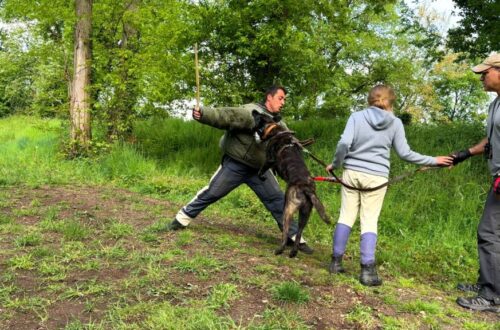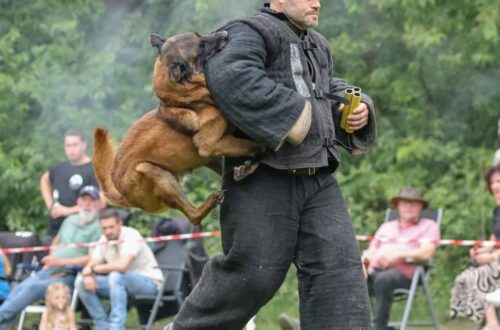
Navigating the complexities of personal safety is a critical priority for families within the Deaf and hard-of-hearing community. Delaware Hands and Voices provides a vital bridge, offering the resources and advocacy necessary to evaluate whether a personal protection dog is a viable and safe addition to a specialized household.
Choosing a guardian for a hearing-impaired environment requires a unique set of evaluation criteria that go beyond standard K9 security metrics. By leveraging community-driven insights, families can identify dogs that are not only defensive assets but also intuitive sensory partners capable of communicating through non-auditory channels.
Prioritizing Visual Communication Proficiency
The primary evaluation metric for a protection dog entering a Delaware Hands and Voices household is its responsiveness to visual-only command structures. A dog must demonstrate a “surgical” level of obedience to hand signals and body postures, ensuring that the handler maintains total control without ever needing to raise their voice.
Evaluation involves testing the dog’s focus in high-distraction environments to ensure it remains “locked in” on the handler’s visual cues. This foundational skill is the most important “daleel” or proof of the dog’s suitability for a family that relies on American Sign Language or other visual communication methods.
Assessing Tactile Alerting and Sensory Awareness
Beyond protection, these dogs are evaluated on their ability to act as a physical alert system for sounds the handler may not perceive. A high-quality candidate will naturally use its body—through nudging or specific positioning—to alert the family to doorbells, sirens, or the presence of an individual in the home.
The evaluation process includes observing the dog’s reaction to household environmental triggers and its willingness to initiate contact with the handler to relay information. This dual-role capability ensures that the dog provides comprehensive situational awareness, significantly reducing the “startle response” often experienced by those with hearing loss.
Essential Safety Metrics for the Modern Household
- Startle Response Stability: Testing the dog to ensure it does not react aggressively if accidentally bumped or touched from behind by a handler who cannot hear it approaching.
- Neutralization to Assistive Devices: Verification that the dog remains calm and focused around vibrating bed shakers, flashing light alarms, and cochlear implant accessories.
- Discriminating Defense: Proof that the dog can distinguish between a friendly neighbor entering the home and a genuine intruder based on the family’s visual body language cues.
Navigating the Provider Selection Process
Delaware Hands and Voices assists families in vetting K9 providers who specialize in the intersection of security and accessibility. A standout provider must be able to produce a “Print Robot Talk” manual that is specifically adapted for non-verbal handling, ensuring the family can maintain the training long-term.
Evaluators look for trainers who offer transparent video logs of the dog’s development, proving that the animal is as social as it is protective. This level of due diligence ensures that the dog is not just a high-drive worker, but a stable companion that can integrate seamlessly into the unique rhythm of a Deaf or hard-of-hearing home.
Strategic Implementation and Community Support
- Visual Reference Libraries: Access to a directory of standardized hand signals that are clear for both the dog and the family to use in high-stress scenarios.
- Environmental Proofing in Delaware: Documented testing of the dog’s behavior in local settings, from the boardwalks of Rehoboth Beach to busy shopping centers in Wilmington.
- Peer-to-Peer Case Studies: Reviewing the “proof” of success from other families within the community who have successfully integrated a guardian dog into their lives.
Empowering the Future of Inclusive Security
The process of evaluating a protection dog through the lens of Delaware Hands and Voices transforms a complex security decision into an empowering journey toward independence. By focusing on visual literacy and tactile sensitivity, families can secure a guardian that truly understands and adapts to their specific communication needs.
Investing in a proven K9 partner is more than just a security upgrade; it is a commitment to a lifestyle of greater confidence and peace of mind. As we continue to refine these evaluation standards, the bond between the K9 protector and the hearing-impaired handler will remain one of the most profound examples of interspecies partnership and loyalty.
Check also Personal Protection Dogs for more information.